

Permission Granted to Distribute by Signature Contributor
Business, Science, and Health Care
Weston Smith was a bright, talented controller and CFO of HealthSouth in the 2000s. His healthcare company had nearly $4.5 billion in revenue in 2003, dominated the rehabilitation, surgery and diagnostic services market and employed more than 60,000 people at 2,000 facilities in every state of the U.S. It also had facilities in the United Kingdom, Canada, Australia, Puerto Rico and Saudi Arabia. It owned and operated several acute care hospitals that specialized in orthopedics. At the time Smith was CFO, the company was the largest publicly listed healthcare company in the United States, based on the number of locations, and the third based on revenue[ Interesting on-line source for CFO Newsletter: McCann, David. (March 27, 2017). Two CFO’s Tell a Tale of Fraud at HealthSouth. CFO.com.].
Weston Smith, raised by a “wonderful family with good values,” as described by Smith, worked hard to provide for his family and to climb the corporate career ladder in a competitive financial services environment. Fast forward several years and he became the CFO of HealthSouth, a high growth health care company, working for a tough, charming, “take-no-prisoners” kind of CEO boss. It was for a publicly held company, demanding the typically ever-increasing numbers for the boss and for the stockholders. The pressure to produce was relentless and the boundary between what was legal and not continued to blur. This is a story of redemption and renewal for Smith: One that started with good intentions, then led to greed, then fear, then an active and conscious state of trying to do what was right, regardless of the consequences.
I met Smith while he was a guest lecturer on business ethics to some MBA students at The Ohio State University. His personal story was so compelling that it caused many of the business students to question in a more serious manner what they would do if they were in Smith’s place. Smith now spends all of his time working to get future business professionals to function in the way he did in his early career and not to be enticed by the trappings of big money acquired in a less than honorable manner.
Weston Smith
Healthcare CFO, Whistleblower and FBI Informant, Prison Life, Redemptive MBA Speaking Engagements


Whistleblower Weston Smith was in deep after participating in widespread financial fraud at HealthSouth Corporation, a fast-growing Birmingham, AL, healthcare provider through the 1990s. Ultimately, he became an FBI informant and served 14 months in prison.
Smith joined HealthSouth in 1987 and soon became aware that company executives were routinely overstating financial results. At first the deception seemed small, possibly within the discretion of the company. He told himself that they could be resolved in audit adjustments later. But as the years went
by the pressure to maintain and expand earnings growth eventually became a fraud estimated at $3 billion.
Smith said the clear objective was to pump up the earnings to meet, or exceed, Wall Street expectations and drive up the company’s share price. A higher stock price gave the company more cash to finance acquisitions and fuel more growth. “Any company is going to have certain judgment gray areas or whatever you want to call it that the numbers can go in any direction. It felt like a lot of judgment type calls at that point. At least, that’s what we were saying to one another. The fact of the matter is that these judgment calls are being driven by the need to hit the Wall Street number. “
The tone of the company was set by its hard-charging CEO Richard Scrushy. “He was the bigger than life CEO. He wasn’t just in the business world, he was a major power figure within the state of Alabama,” said Smith. “I’ve had people tell me this that obviously they didn’t like that I had participated in this fraud. At the same time, I got a lot of credit because I finally stood up to Richard and blew the whistle on him.”
Smith knew about the overstated earnings from the start. “I just saw it as a very aggressive place with very aggressive goals and financials. It was getting slippery at that point, but Richard’s a pretty tough guy to work with, very demanding. At the same time, I kind of viewed it as what a great career opportunity I had in front of me. I’m with a start-up company that had gone public. If we can truly grow this company and make something out of it, wow I’ll retire by the time I’m 50 years old.”
“Richard always wanted to exceed whatever internal growth we could possibly budget,” continued Smith. “Part of that is management, setting tough goals, making people work harder. I understand a part of that but the other part of it was that he knew that the existing numbers were being fraudulently met.” Each quarter the earnings inflation grew. “It began as kind of a small number and it had this snowball effect.”
In all, Smith estimated that 25 people were directly involved in the fraud and another 200 probably knew it was going on. By 2000 he became controller of the company with more responsibility over the HealthSouth audits. “That is when things became elevated as far as getting some real personal accountability. That is when I became very serious about how are we truly going to fix this problem? We have to take ownership to this problem. How are we going to decrease the earnings and expectations or how are we going to improve our internal operations enough to bridge the gap?”
Meanwhile, the company began to face new competition and unfavorable changes in the industry. “Our own internal numbers were becoming worse. However, Richard would have nothing to do with it as far as guiding Wall Street. He continued to announce that we were going to grow at certain levels which we knew internally weren’t possible,” said Smith. “At that point, we had blood on our hands. The numbers were way off base. If we just suddenly say, ‘Richard, we’re not going to cook the books anymore and we’re going to report the truth,’ the falloff would have been so great that somebody would have recognized that we had been cooking the books for a long, long time at that point. Just stopping the fraud at that point, didn’t feel like a viable option because that would have revealed the fraud itself.”
Smith and other executives began to try to come up with strategies to structure the business so that the fraud would not be detectable. One executive used the word “fraud.” “Richard said, “Don’t ever use that word in this office again. Your plan sounds good, go do those things, but we’re not going to use that word.”
Scrushy justified the financial lies because many thousands of employees and their patients were depending on the firm. “There were all these rationalizations of why it was okay to play with the numbers because of some kind of noble cause that was there. Richard was the kind of guy that if you wanted to have a hard conversation with, it had to be one-on-one because he liked to be the bully. Group settings are no place to challenge the guy because you got hammered pretty hard,” recalled Smith. “He was also very paranoid the entire time. If anyone ever handed him a piece of paper with fraudulent information on it, he would kind of slide it around with his pencil, look at it and then, slide it back. It was to the point of not getting his literal fingerprints on a damaging piece of paper.“
In 2001 Smith was named chief financial officer and the following year was subject to the new Sarbanes-Oxley Act, also known as the “Public Company Accounting Reform and Investor Protection Act.” The law carried tough penalties for corporate executives who submit misstated financial results and was prompted by financial scandals at Enron and WorldCom. Smith said: “That was the slap in the face of, ‘Weston, you have been living this lie for so long it’s time to put it to an end.’ I started making noise with Richard and some of the execs at that point and basically said, ‘Count me out, I’m not going to be here.’” He said he would not sign off on the next financial statements.
Scrushy leaned on him to stay. “As he put it, you may be willing to fall on your sword, but think about all of the other people that are going to get hurt when you do. He started naming names of the other people that are involved in the fraud. He was saying things like, ‘Angela just had a baby. She’s going to go to prison and who is going to raise her child when she goes off to prison?’ There was this emotional pulling of heartstrings. This went on for quite some time.”
Smith said Scrushy promised he would restructure the company and put Smith in a division untainted by fraud. Smith stayed on and signed another set of statements, but then Smith said Scrushy reneged. “At that point, I said, “Enough. Enough.“
He called a lawyer and met with a team of federal agents in hotel attached to a Birmingham mall on a Saturday night. Smith’s instructions were to walk through the mall first to make sure he was not being followed. “It was like something out of a John Grisham novel,” he said. Smith spoke with the agents for three hours and said that the expression in the agents’ eyes indicated the fraud was much larger than they had expected. “I was obviously scared to death. I knew my life was about to change in a number of very unpleasant ways,” said Smith. “I didn’t have a promise of immunity, or a plea deal or anything like that. I knew I was in trouble. What I do remember well is when I left that hotel room that night, I felt the biggest sense of relief. I was thinking, Thank God, the lie is over.’” He slept well that night for the first time in years. “I knew I was in trouble, but my attitude was, Okay, I’m in trouble, but it’s also over at the same time. This is the past and I’m going to accept the consequences of what I’ve been involved in, but the lies are over.”
Before federal agents raided HealthSouth and the scandal became known, Smith felt he was in danger. He said the company had a well-armed security force. “The weeks leading up to it becoming public, I watched my back,” he said. “I think they would have had me whacked. I really do. I’m not exaggerating. I think one way or the other, they would have had me killed.” Soon, though, he was less concerned. “It became less of an issue because everybody would have had to be whacked once it became public.”
Smith said his decision to come clean was rooted in strong values passed on from his parents. “When I did start crossing the line with what I got involved with I was still blessed with good parents. I knew right from wrong. Later on, when I was distracted and all of the other temptations that came along, at the end of the day, I think that foundation that my parents provided was what kept me awake at night.” He said that background led him to think, “‘This isn’t right. What are you doing Weston? Why are you going down this trail?’ Ultimately, that is what led to my final decision to blow up the fraud at the company. It was just the fact that I wasn’t going to live my life like that anymore. I was living a lie. It was a terrible internal conflict as far as who I was.”
He recalled that during HealthSouth’s boom times he bought a big house in Birmingham. When his parents came to see it for the first time he said his mother told him, “’Oh Weston, we’re so proud of you.’” Smith said that felt like a punch in the gut. “So much of that was based on lies, this so-called success in life. At that point, I felt like I denied their trust. This wasn’t real in so many ways. Of course, I hid that from them. I wasn’t going to confide in what I was in the middle of. She meant it as a compliment which really stood out at the time because I knew who I really was.”
Smith received a 27-month sentence for his part in the HealthSouth fraud, but was not prepared for prison. “I felt like I was trapped in time and in somebody else’s body. The first night I was there lying in a top bunk bed and thinking, ‘Oh my gosh, this is my life for the next two years.’ It literally felt I was suffocating. I literally felt like I couldn’t breathe,” said Smith. “It just didn’t seem real. The whole time I was thinking, ‘How am I going to get through this.’
He relied on a schedule and staying very busy with chores, reading and anticipating Sunday visits with his children. “On Sunday, late afternoon, once visitation was over Sunday nights were by far, the worst time as far as, ‘Okay another week of this place,’ just kind of getting through the whole humility, depression, and in dignity of the whole thing,” said Smith “I learned a lot about humility during that time. Just all of the material things stripped away really not so much that as just being in federal prison. Being an inmate is it was suffocating in many ways. It took a lot of soul searching during that time of, ‘Weston, how did you let your life become so messed up that you’re now in prison?’
Scrushy was tried but acquitted on charges related to the HealthSouth fraud. He did serve five years in prison on unrelated bribery charges. Smith said Scrushy takes no ownership of the HealthSouth fraud. “To me, let’s just say for the sake of argument that he didn’t know about the fraud, he still owed a lot of people an apology. He could have at least said, ‘This happened on my watch.’ For many years as this was all going down, he never even did that. He just continued to hold himself out as a victim from a bunch of folks.”
After his release from prison after serving 14 months, Smith found it awkward to run into some
acquaintances, “They looked at me like I had leprosy or something like that. They were afraid of what they could talk about,” said Smith. “There was almost a fear of carrying on a conversation. That was just extremely humbling to not want to see people I used to know.” More often, though, he was surprised to be met with warmth and acceptance. “The reaction was a thousand times better than I expected. People were good. People were kind and forgiving more than anything. Even leading up to that, there were a lot of times when I was between coming forward and actually going to prison that people were much better than I really deserved or expected.”
As mentioned earlier, Smith now works as a speaker lecturing on business ethics. He was struck by a plaque on a wall at Dartmouth University that read ‘Who does not answer to the rudder will answer to the rocks.’ “I saw that plaque and thought that’s me right there. I was living an undisciplined life without the rudder and keeping everything under control and look at where I wound up. I wound up on the rocks but more important than that, look at who was on my ship. My family, friends, parents. All of those people were on my ship when I crashed that thing into the rocks,” he said. “Of course, there is the wind that can blow a ship way off of course. The wind in our life can be the distractions and the temptations that can blow us off course. There I was trying to build the super career and make all of this money and all of the so-called riches that go along with it. That was nothing more than distraction. That was just blowing me off course with who I really knew I was.”
Courage. The courage for Smith to do what he did was perhaps more salient and significant while sitting in his jail cell in re-considering his life purpose-his identity of who he was and what he wanted to do about it. Prior to jail, his actions to come clean appeared to be perhaps more about pain reduction – coming clean to have more of an emotional baggage-free life. This is not to minimize his attentiveness to right and wrong. Going public would knowingly be at a tremendous personal cost on multiple fronts. Tough to do but not surprising for a Protector taking inventory on the emotional and familial costs of self-deception.
Also, with years of mounting, weighty, conflict-laden pressure his decision to go to the FBI was a strategic early step toward transitioning to a later stage of functioning on the personal leadership continuum. He could begin to view the world from something less than me versus ‘not me’ transactional calculus. He could begin to think of himself in relation to his family, friends, neighbors and colleagues with new eyes and more malleable relational values under construction. It was also a return to his roots where life was good. But perhaps in his return, it was now as a road-tested life warrior with new and deeper sensibilities affecting his knowing and valuing life orientation. It has been said in the popular culture, that life is about growth or decay. For Smith, he chose growth. He chose a better way.
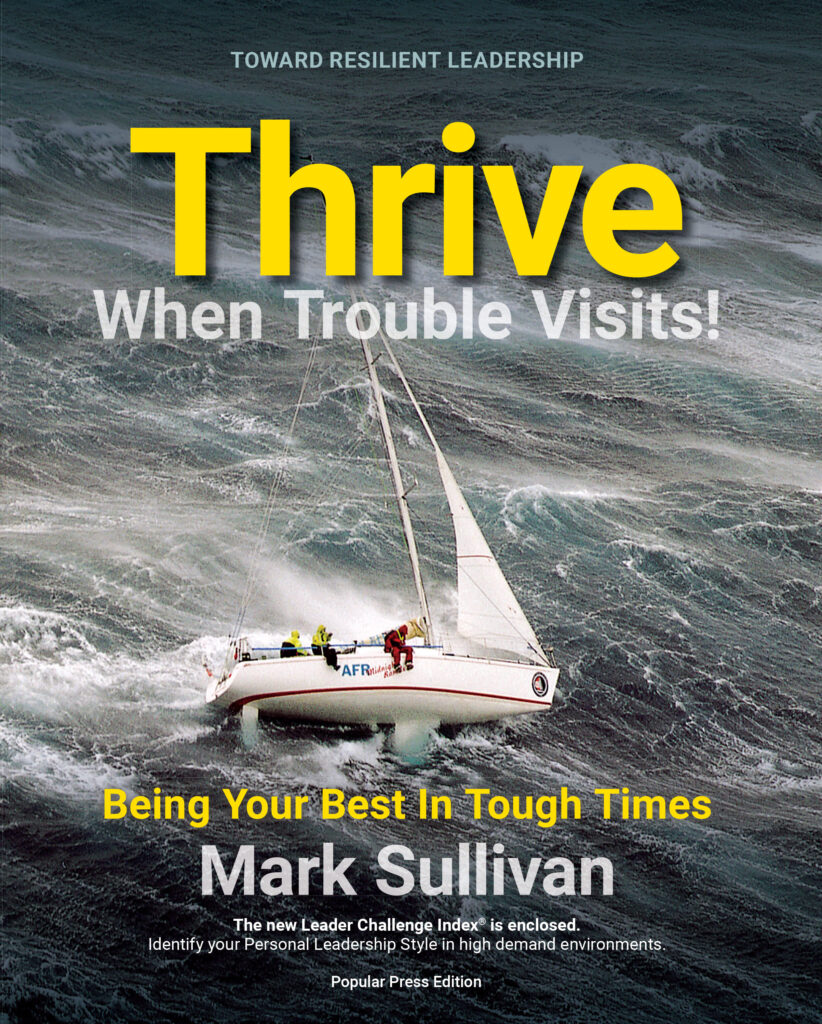
If you enjoyed this story, consider
nec gravida tempor dolor convallis. facilisis in nec gravida tempor dolor convallis.
facilisis in facilisis tempor libero, orci cursus nec orcial nec gravida tempor dolor convallis
2-way access:
- To purchase the THRIVE book separately, click “Buy Now”
- Want to purchase only the Toolkit? Click on the ‘Get Toolkit’ button to access it instantly